Home › Videos › The Federal Reserve Case, Episode 2
The Federal Reserve Case · Episode 2
Is the Federal Reserve Losing Money? A $233 Billion Hole, Booked as an Asset
Video · 22 min · Published October 23, 2026 · Episode 1
Yes — on paper. The Fed's weekly report for October 15, 2026, shows minus $233 billion in “earnings remittances due to the U.S. Treasury,” and footnote 8 calls it a “deferred asset.” Since September 2022 the Treasury has received almost nothing from the Fed, after about $85 billion a year in 2012–2021. Congress never voted on the loss — or on the 2% inflation target.
Every Thursday the Federal Reserve publishes its balance sheet, the H.4.1 release. In the edition for October 15, 2026, table 6 has a line called “Earnings remittances due to the U.S. Treasury.” The total is −$233,181 million.1 The organization that orders America's dollars printed is $233 billion in the hole — and footnote 8 to the same table books that hole as an asset.
H.4.1, table 6, week of October 14, 2026 (millions of dollars). Only Atlanta (161), St. Louis (30) and Dallas (87) are positive. Source: federalreserve.gov.1
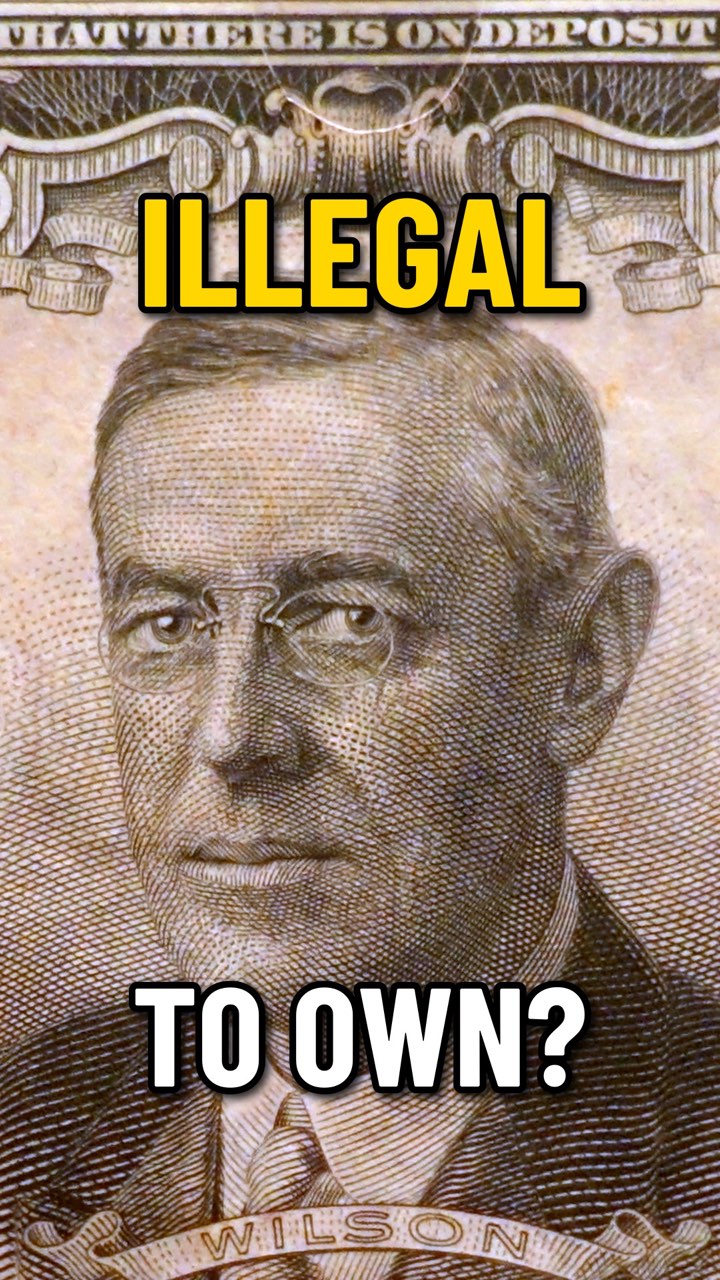
To picture the number: $233 billion is more than 2.3 million $100,000 gold certificates — the largest bill America ever printed. According to the Bureau of Engraving and Printing, only 42,000 were ever made.2
Episode 1 showed how the system is built: Congress can shut down the Fed with a single law and in 113 years never has. This episode asks who pays for it, through three exhibits: your wallet, a hole in the Fed's books, and one day in September 2021.
Exhibit 4: Your wallet — who set the 2% target? 1:43
In June 2022 consumer prices were up 9.1% from a year earlier.3 A thousand dollars set aside a year before bought only about $917 worth of goods. Rising prices are usually described as weather. But in America they come with a written rule.
The Federal Reserve Reform Act of 1977, signed by President Carter, gave the Fed three goals: maximum employment, stable prices and moderate long-term interest rates — with no number for “stable.”4 The Humphrey-Hawkins Act of 1978 required the Fed to report to Congress and did set numbers — inflation of 3% or less, and zero by 1988 — but as goals for the economy as a whole.5 A number for the Fed itself, Congress never named.
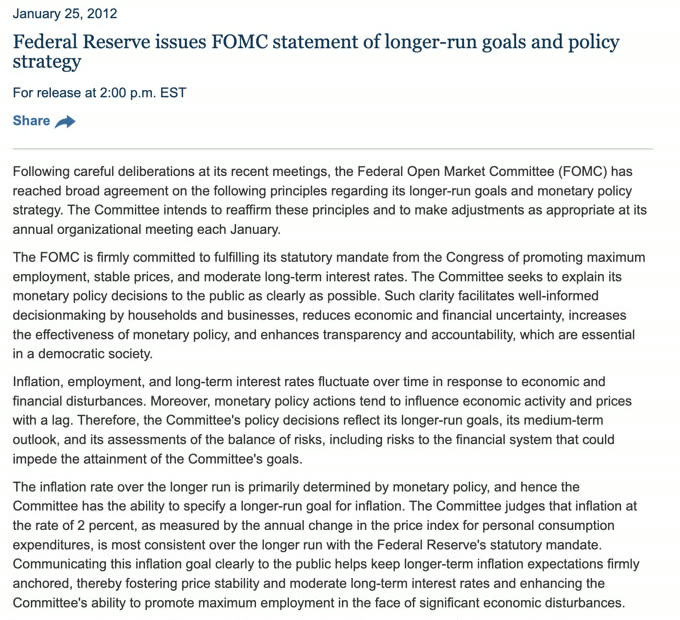
That number appears in a different document. On January 25, 2012, the Federal Open Market Committee wrote that inflation “at the rate of 2 percent” is most consistent with its mandate.6 In September 2026 Chair Kevin Warsh repeated the commitment “to our 2 percent PCE inflation objective.”7 The 2% was written down by the committee itself — not by Congress, the president or voters.
FOMC statement of longer-run goals and policy strategy, January 25, 2012. Source: federalreserve.gov.6
Two percent compounds: over ten years it adds about 22% to prices. Over the long run, the official consumer price index shows a 1913 dollar — the year the Fed was created — is worth about 34 of today's dollars, a 97% loss of purchasing power.3 That is more than a century, and not only the Fed's doing. But today there is one target on the books, and the committee wrote it.
Who votes? The FOMC has twelve members: the seven governors, the president of the New York Fed and four other Reserve Bank presidents in rotation.8 Five of the twelve votes belong to Reserve Bank presidents, who are chosen by their banks' Class B and C directors.
Exhibit 5: The hole — a loss booked as an asset 4:42
On August 31, 2022, the Fed was still paying the Treasury: the remittances line showed +$1,024 million. One week later, on September 7, the same line read −$165 million.9 It did not bounce back. From that week the system as a whole has been in the red. The hole grew for more than three years and reached $244 billion by March 25, 2026;10 on October 15, 2026, it stood at $233 billion.1
H.4.1, table 6: August 31, 2022 (+1,024) and September 7, 2022 (−165), millions of dollars. Source: federalreserve.gov.9
Before that, from 2012 to 2021, the Fed sent the Treasury about $85 billion a year on average — every year, without a new tax.11
How does the Fed explain the minus? Footnote 8: negative amounts represent a cumulative “deferred asset,” incurred “when earnings are not sufficient to provide for the cost of operations, payment of dividends, and maintaining surplus.”1 Dividends — to the same stockholding banks from Episode 1.
At a House Financial Services hearing in June 2022, Rep. French Hill asked whether the Fed needs a positive capital cushion. Chair Jerome Powell: “No, we don't … We have a very thin sliver of capital, but it is sort of symbolic. We are not a private institution.” Hill then asked whether an operating loss would simply be treated “as a deferred asset … money you owe back to the Treasury when you start making a profit.”12 Two and a half months later, the sign flipped.
A normal company in the red reports a loss; the Fed books its minus as an asset, to be paid off from its own future profits. Until then the Treasury gets almost nothing: only three of the twelve banks — Atlanta, St. Louis and Dallas — show positive remittances, in the millions rather than tens of billions. In the first seven weeks after the flip, only Atlanta never went negative.9 At about $85 billion a year, $233 billion is almost three years of the old payments — and not one member of Congress voted for the budget to lose them.
Exhibit 6: One day — two Fed presidents leave 8:45
On September 27, 2021, two Reserve Bank presidents announced they were leaving: Eric Rosengren of Boston and Robert Kaplan of Dallas.13 Weeks earlier, on September 8, Bloomberg had reported Rosengren's trades in real-estate investment trusts; The Boston Globe named one, Annaly Capital Management.14 Kaplan had trades of his own.
The obvious theory is a violation. It breaks on one fact: the investments were permitted under the Fed's rules.13 Rosengren moved up his long-planned retirement from June 2022 to September 30, citing a kidney condition; Kaplan left on October 8.15 The documents show dates, positions and rules — not why both left the same day. What they do show: the yardstick for both was the Fed's own rules, not a law passed by Congress. That is the third line in this episode drawn inside the system — the 2% target, the minus booked as an asset, and the trading rules.
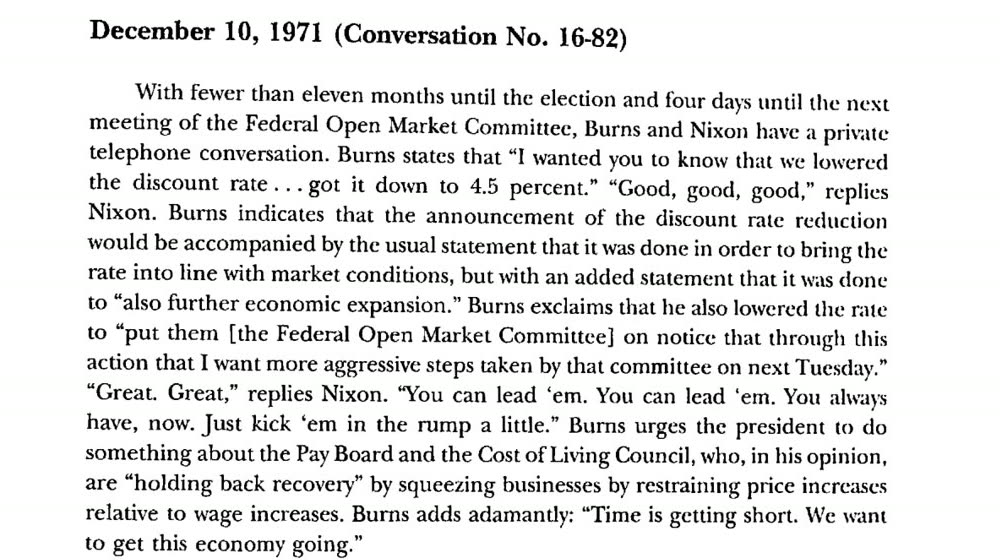
On December 10, 1971, Fed Chair Arthur Burns told President Nixon he had cut the discount rate and wanted the committee to go further. Nixon, on the White House tapes: “You can lead 'em. You can lead 'em. You always have, now. Just kick 'em in the rump a little.” On another tape: “I really don't care what you do in April, but between now and April … that can hurt us … in November.”16
Burton A. Abrams, “How Richard Nixon Pressured Arthur Burns: Evidence from the Nixon Tapes,” Journal of Economic Perspectives (2006), p. 181. Source: FRASER.16
In July 2025, President Trump visited the Fed itself: “if you took it down three points … we would save more than a trillion dollars.”17 On September 16, 2026, the Fed raised rates — unanimously. Asked about the president's threats, Warsh answered: “Part of the independence of the Federal Reserve is we stay in our lane. Independence is a two-way street.”7 Presidents push — Truman, Johnson, Nixon, and today the Lisa Cook case. But that pressure is about rates, and a president cannot shut the Fed down.
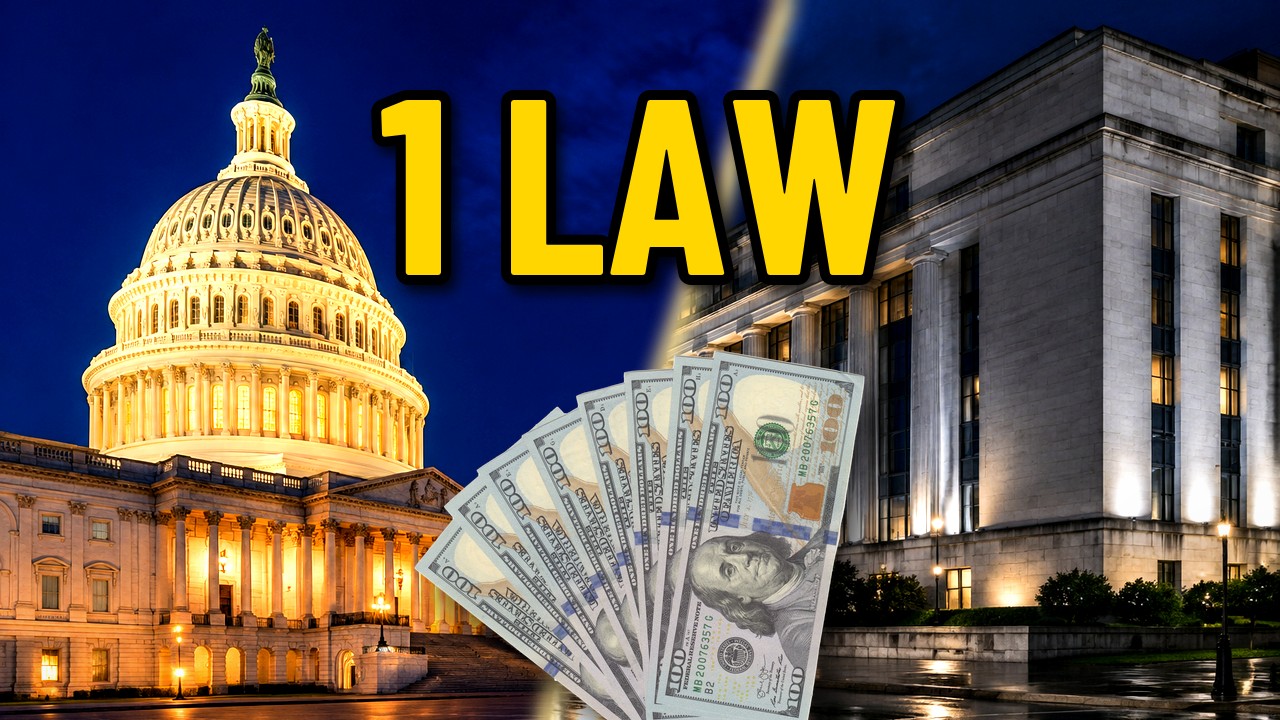
Only Congress can shut down the Fed, and for 113 years only Congress hasn't. We tested the three usual answers against the documents.
“The system would collapse.” No document in this case proves or disproves it. What the documents do show: Congress has rebuilt the Fed by law more than once — in 1935 it removed the Treasury Secretary from the Board,18 in 1977 it wrote down the Fed's goals,4 and in 2010 Dodd-Frank took Class A directors out of choosing Reserve Bank presidents and forced crisis data into the open.19 The system kept working. And a vote on its own collapses nothing — yet since 2007 these bills never reach one.
“The president runs the show.” The pressure is real, but in every document it is about rates, not abolition. A governor can be removed only “for cause,” and in 2026 the Supreme Court left the Fed question open, calling it possibly a special case.20 This explains conflict — not Congress's silence.
“The system is good for the banks.” Stockholding banks pick six of nine directors at every Reserve Bank; dividends come before the Treasury in footnote 8; in the Bloomberg case the banks fought to the Supreme Court to keep their names secret. But the Federal Reserve Act is written and voted on by Congress, which in 2010 took the Class A directors' vote away. Banks can argue in court; they cannot vote on a law.
What follows is the editors' conclusion, built on the evidence above.
What does the Fed do for Congress that Congress does not want to do itself? Money: in profit years the budget gets about $85 billion with no new tax and no vote; in loss years the budget goes without — also with no vote. Distance: Congress itself removed the Treasury Secretary from the Board in 1935, so when loans get expensive the person answering for it is neither in the administration nor in Congress. The number: the law says “stable prices”; the 2% was written by the committee. Warsh put it this way in September: the decision was “the right decision to deliver on the remit that Congress gave us to ensure stable prices.”7
Our conclusion: the Fed is convenient for Congress. Shutting it down would make rates, inflation, the 2% and the minus in the report Congress's own decisions — to answer for at the polls. The weak spot: we found no document in which a member of Congress says this outright. So the conclusion has to be tested.
Two signs to watch, both about Congress. First: does H.R. 1846, the Federal Reserve Board Abolition Act, or a bill like it ever get out of committee? Since 2007, none has reached a vote.21 Its author, Rep. Thomas Massie, has seen this before. On the House floor in September 2014 he recalled that Ron Paul's Audit the Fed bill passed the House 327 to 98 in July 2012 and never got a Senate vote.22
Second: what do the Fed's loudest critics actually do? If they vote to shut down or rein in the Fed, our theory weakens. If they criticize it but leave the bills in committee, it holds. Separately, the Lisa Cook case will show whether a president can remove even one governor.23 You can run part of the test yourself: H.4.1 comes out every Thursday, and the remittances line is in table 6.1
Every bill says “Federal Reserve Note.” The Constitution gave power over this money to Congress; Congress could take it back with a single law, and for 113 years it has left it where it is. Next time the Fed announces a rate decision, ask: who benefits — and why does Congress stay out of it?
Sources
Federal Reserve statistical release H.4.1, October 15, 2026, table 6 and note 8 — federalreserve.gov
Consumer Price Index, all urban consumers (CUUR0000SA0): June 2021–June 2022 +9.1%; 1913 average vs. September 2026 ≈ 34× — Bureau of Labor Statistics; FRED CPIAUCNS
H.4.1, table 6: September 1, 2022 (week of Aug 31), September 8, 2022 (week of Sep 7), and weekly releases through October 20, 2022 — federalreserve.gov
Federal Reserve Balance Sheet Developments, May 2026 — federalreserve.gov
Reserve Bank remittances to the Treasury, 2012–2021 (88.4, 79.6, 96.9, 97.7, 91.5, 80.6, 62.1, 54.9, 88.5, 107.4 billion; average ≈ $85 billion) — Federal Reserve Board annual press releases, e.g. Jan 11, 2021, Jan 14, 2022; 2023 results — Jan 12, 2024
House Financial Services Committee, hearing with Chair Powell, June 23, 2022 — govinfo.gov
“2 top Federal Reserve officials retire after trading disclosures,” NPR / AP, September 27, 2021 — npr.org
Federal Reserve Bank of Boston press release, September 27, 2021 — bostonfed.org; Federal Reserve Bank of Dallas press release, September 27, 2021 — dallasfed.org
Burton A. Abrams, “How Richard Nixon Pressured Arthur Burns: Evidence from the Nixon Tapes,” Journal of Economic Perspectives 20(4), 2006 — FRASER
The White House, “President Trump Visits the Federal Reserve,” July 24, 2025 — YouTube, @WhiteHouse
Trump v. Cook, 609 U.S. 528 (June 29, 2026) — supremecourt.gov; CNBC, October 14, 2026 — cnbc.com
Footage in the video: The White House, Federal Reserve Board, U.S. House, National Archives, National Museum of American History. Narration voice is AI-generated. “Who Benefits” is the editors' analysis based on the documents shown. Educational and commentary use (17 U.S.C. § 107). Not financial advice.
Full transcript
0:00 · The Fed's Minus $233 Billion
How can the Fed be in the red — and call it an asset? That minus equals more than two point three million of the largest bills ever printed in the United States — one hundred thousand dollars each. According to the Bureau of Engraving and Printing, only forty-two thousand were ever made. Congress can shut down the Fed with a single law. In a hundred and thirteen years, it hasn't. Why? Now look at this line. The Fed's weekly report, October fifteenth, twenty twenty-six.
The line is called "Earnings remittances due to the U.S. Treasury." And there's a minus sign. Minus two hundred thirty-three billion dollars. The organization that orders America's dollars printed is two hundred thirty-three billion in the hole. And in the report, that hole is booked as an asset. That's not a typo. That's how the Fed itself counts it — and the explanation is in footnote eight to this very table. We have a theory. We'll test it against three pieces of evidence — and you decide. Who's paying for this — and why is Congress silent?
1:19 · The Case So Far
Part one showed how this works. It didn't show who pays for it. The link to episode one is on your screen right now.
Three exhibits: your wallet, a hole in the Fed's books, and one day in September twenty twenty-one. Let's start with the closest: what's happening to the money in your wallet?
1:43 · Exhibit 4: Your Wallet — Who Set the 2% Target?
June, twenty twenty-two. A thousand dollars you put aside a year earlier now buys only nine hundred seventeen dollars' worth. Eighty-three dollars, gone. Nobody took them from you. Prices were up nine point one percent in a year.
The usual explanation: it just happens — prices go up on their own, like the weather. But rising prices in America come with a rule. And the rule is written down. First, the law of nineteen seventy-seven. Congress passed it under President Carter.
It gives the Fed these goals: maximum employment, stable prices and moderate long-term interest rates. Stable prices. No number. A year later, Congress passed another law — Humphrey-Hawkins. It required the Fed to report to Congress.
And it does have numbers: inflation of three percent or less, and zero by nineteen eighty-eight. But those were goals for the whole economy. A number for the Fed itself, Congress never named. The number shows up in a different document. January twenty-fifth, twenty twelve. The Fed's Open Market Committee, the F-O-M-C, issues a statement. Its longer-run goal, the committee writes, is inflation of two percent. September of this year.
Here's how the current chair of the Fed talks about it.
Kevin Warsh: …and I have been unequivocal in our commitment to price stability and to our 2% PCE inflation objective. Two percent was written down by the committee itself. Not Congress. Not the president. Not the voters. Two percent a year sounds modest. But it compounds. Over ten years at two percent, prices rise by about twenty-two percent. That's not a forecast — just the plain arithmetic of the target. And over the long run, the official price index shows this.
A dollar from nineteen thirteen — the year the Fed was created — is worth about thirty-four of today's dollars. The dollar has lost ninety-seven percent of its purchasing power. To be fair, that's over more than a century, and not just because of the Fed. But today there's one target on the books — and the committee wrote it. Who votes on that rule? Seven members of the Board of Governors. The president of the New York Fed.
And four more regional bank presidents, taking turns. Remember part one? A Reserve Bank president is appointed by that bank's Class B and Class C directors. Of the twelve votes that set the price of your money, five belong to Reserve Bank presidents. Who decided your money should lose two percent a year? The committee voted. Congress didn't. And what was happening to the Fed's own money in those same months?
4:42 · Exhibit 5: The Hole — a Loss Booked as an Asset
August thirty-first, twenty twenty-two. The Fed is still paying the Treasury. In the weekly report, on the remittances line: plus one billion, twenty-four million dollars. One week later, September seventh, same line: minus one hundred sixty-five million. What happened in those seven days?
The obvious version: a glitch. One bad week — it'll bounce back in a month. It didn't. From that week on, the system as a whole has been in the red. The hole kept growing for more than three years. Today it's about two hundred thirty-three billion. And before that? From twenty twelve to twenty twenty-one, the Fed sent the budget about eighty-five billion dollars a year on average. Every year. Without a single new tax.
What exactly happened in those seven days, the report doesn't say. But it does say what the minus means. How does the Fed explain the minus? In footnote eight of its own report. Negative amounts are a cumulative "deferred asset." It builds up when earnings aren't enough to cover operating costs, pay dividends, and maintain surplus. Read it again. Dividends. The same stockholding banks from part one. On the list of things the earnings can't cover: their dividends.
June twenty twenty-two, a House hearing. Congressman French Hill asks Fed Chair Jerome Powell whether the Fed needs capital.
Rep. French Hill: My first question is, does the Fed need a positive capital cushion in order to carry out its mission as our central bank?
Jerome Powell: No, we don't.
Jerome Powell: …we have a very thin sliver of capital, but it's sort of symbolic. It's just not something. We're not a private institution. So the "private bank" theory from part one was rejected by the Fed's own chair — on the record, before Congress. And the key word is "asset." A normal company in the red reports a loss. The Fed books its minus as an asset. Its own future profits will pay it off. And until they do, the Treasury gets almost nothing: only three of the twelve banks pay — millions instead of tens of billions.
Those three are Atlanta, St. Louis and Dallas. And through the first seven weeks after the sign flipped, only Atlanta never once went into the red. At the same hearing — two and a half months before the sign flipped — Hill asked about losses, too.
Rep. French Hill: There's a point in this interest rate increase where potentially you'd be at an operating loss, I take it, and that you would not be having a profit to distribute to the Treasury. Is that possible?
Jerome Powell: Yes, and that can happen, but again, it will have no effect — no effect whatsoever — on our ability to conduct policy, and it's not something we would consider in setting policy.
Rep. French Hill: Right. And you just would treat that as a deferred asset. Is that right? In other words, this is money you owe back to the Treasury when you start making a profit, you'd write that deferred asset off, right? So who pays? About eighty-five billion a year — then almost zero. Almost zero until two hundred thirty-three billion is paid off. That's almost three years of the old payments. Not a single vote.
Not one member of Congress voted for the budget to lose that money. It just stopped coming. An organization that orders the nation's dollars printed ends up in the red, books the loss as an asset, and the budget comes up short without a vote. How is that even possible? Under the law, it's possible. Here, the lines are drawn by the Fed's own report. So where's the line for its own people? If this case has you hooked, subscribe to American Money History.
Next up — the people inside the system.
8:45 · Exhibit 6: One Day — Two Fed Presidents Leave
September twenty-seventh, twenty twenty-one. On the same day, two Reserve Bank presidents announce they're leaving — Boston and Dallas.
This is a test of the line: the documents will show dates, positions and rules — but not why both left on the same day. The obvious version with a coincidence like that: a scandal, a violation. Let's check. September eighth. Bloomberg reports on trades by Boston Fed President Eric Rosengren. He'd been trading shares in real-estate investment trusts.
The Boston Globe names one: Annaly Capital Management. Dallas Fed President Robert Kaplan had trades of his own. And that's where the violation theory breaks: the trades were permitted by the Fed's rules. Rosengren had planned to retire in June twenty twenty-two — long planned, he said. Now he's out in three days, on September thirtieth.
The official reason he gave: a kidney condition. Kaplan leaves on October eighth. So what did the test show? The yardstick for both was the Fed's own rules. Not a law passed by Congress. Presidents like these take turns getting a vote on interest rates — and the line for them is drawn by the system itself. That's the third time in this episode the line is drawn inside the system. The two percent was picked by the committee.
The minus is booked as an asset by its own report. The trading rules are the Fed's rules. Congress can see all of this. So why hasn't it shut anything down in a hundred and thirteen years? And who has actually leaned on the Fed — and what did they want?
10:33 · The Pressure: Nixon, Trump and the Fed
December tenth, nineteen seventy-one. President Richard Nixon is on the phone with Fed Chair Arthur Burns. Burns has just cut the discount rate and wants the committee to go further. Nixon eggs him on. "You can lead 'em. You can lead 'em. You always have, now. Just kick 'em in the rump a little." On another tape, Nixon says it outright: "I really don't care what you do in April, but between now and April… that can hurt us… in November."
A president's words, caught on White House tape. Twenty years before Nixon, Truman had already announced a promise on the Fed's behalf that it never made — we saw that scene in part one. And here's how it sounds in our time. July twenty twenty-five. President Trump — inside the Fed itself.
Donald Trump: We want to get interest rates…
Donald Trump: Yeah, it never helps it. If it's high, it never helps it. Well, it's already as good as we're doing. Think of how well we'd be doing. We'd be like a rocket ship. As good as we're doing, we'd do better if we had—
Donald Trump: …have the lowest interest rate, and if you took it down three points — not a little bit, but three points — if you got us down to one, we would save more than a trillion dollars, basically with just a paper transfer.
The president says it outright: rates should come down. September sixteenth of this year. The Fed raises rates — unanimously. At the press conference, the chair gets a question.
Zach Halaschak: I'm just curious, a couple weeks ago, the president sent out a message essentially threatening to cut off trade to certain countries unless rates were lowered. Obviously, a unanimous decision to do the opposite. Warsh's answer.
Kevin Warsh: …part of the independence of the Federal Reserve is we stay in our lane. Independence is a two-way street. We'll let people that do trade policy and fiscal policy stay in their lane, too. That's how we can stand up here and call them the way we see them. November in America means elections.
This year too: November third, twenty twenty-six. Presidents push. The documents show it: Truman, Johnson from part one, Nixon, and today the Cook case. But that's the president's pressure — and it can't shut the Fed down. So why is Congress silent?
12:56 · Who Benefits: Our Analysis
Only Congress can shut down the Fed. And for a hundred and thirteen years, only Congress hasn't. Why? There are three answers you usually hear. We'll test each one the same way: what the documents say, and what they don't. Then — our own theory.
Theory one: you can't shut the Fed down — the whole system would collapse. Sounds convincing, but there's no document in this case that proves or disproves it. What there is, is this. Congress has rebuilt the Fed by law more than once. In nineteen thirty-five, it took the Treasury Secretary off the Board. In nineteen seventy-seven, it wrote down the Fed's goals. In twenty ten, with Dodd-Frank, it took the bank-representative directors — Class A — out of choosing Reserve Bank presidents, and forced the crisis data into the open. And every time, the system kept working.
So Congress can change the Fed — and knows how. Theory one, even if it's true, explains why the Fed isn't shut down. It doesn't explain why, since two thousand seven, these bills never even reach a vote. A vote on its own collapses nothing.
Theory two: the president runs the show. The pressure is real — we've seen it in the documents: Truman, Johnson, Nixon, and today the Cook case. But look at where that pressure points. In every one of those documents, it's about rates — not about shutting the Fed down. And the president can't shut it down. A governor can be removed only "for cause," and in twenty twenty-six the Supreme Court left the Fed question open, calling it possibly a special case.
If anything, the Fed gets in the president's way. The documents confirm the pressure directly. But theory two explains the conflict — not Congress's silence.
Theory three: the system is good for the banks. Here the documents give us more. Stockholding banks pick six of the nine directors at every Reserve Bank. We broke this down in a short video — the link is on your screen. In footnote eight, dividends are on the list of things that must be covered before the Treasury sees a single dollar. And in the Bloomberg case, the banks went all the way to the Supreme Court to keep their names secret.
But the Federal Reserve Act isn't written or voted on by a bank. Congress does that. And when Congress wanted to, it rewrote who picks Reserve Bank presidents — and the banks' Class A directors lost that vote. Banks can argue in court. They can't vote on a law. So theory three explains why the banks don't object. It doesn't explain why Congress doesn't vote. All three theories hit the same wall. Congress. What follows is our analysis: the editors' conclusion, built on evidence you've already seen.
We're looking at functions, not people. What does the Fed do for Congress that Congress doesn't want to do itself? One — money. When the Fed makes a profit, the budget gets about eighty-five billion a year. No new tax, no vote. When the Fed is in the red, the loss is booked as an asset, and the budget goes without that money — also without a vote. It works both ways. No lawmaker has to raise a hand for the profit. Or for its absence.
Two — distance. We saw it in part one: the Treasury Secretary wasn't taken off the Fed's Board by a president, or by bankers. Congress did it, with the law of nineteen thirty-five. When rates go up and loans get expensive, the person answering for it isn't a member of the administration. And it isn't a member of Congress. Three — the number. The law says "stable prices." The two percent was written down by the committee.
If prices rise, that's a question for the committee. Congress never set the number — so it doesn't answer for it. Here's how the Fed chair put it in September.
Kevin Warsh: …the decision we made today was the right decision to deliver on the remit that Congress gave us to ensure stable prices. The mandate, in Warsh's own words, comes from Congress.
And exhibit six: even the line for its own people is drawn by Fed rules, not by a law of Congress. No one has to answer for that either. From this evidence, we draw a conclusion. The Fed is convenient for Congress itself. When there's a profit, the budget gets money without a new tax. When there's a loss, the budget gets almost nothing — and nobody votes on it. And the price of money is set by someone who isn't a lawmaker.
Who never answers for it at the ballot box. Congress could shut the Fed down with a single law. But then all of it — rates, inflation, the two percent, the minus in the report — would become Congress's decision. And Congress would have to answer for it at the polls. That's our analysis, and it has a weak spot. We found no document where a member of Congress says this outright. There isn't one. There's only how the money and the votes are set up.
So the conclusion has to be tested. You can run part of the test yourself: the Fed's H-four-point-one report comes out every week, and the Treasury remittances line is in table six. The link is in the description. The main test is already on the calendar. So what exactly should we watch for?
18:43 · The Test: Congress and H.R. 1846
Interest rates are set by a committee… of twelve people. Congress has not one vote on it. And Congress has the power to shut the Fed down. With a single law. So how do we test our theory? Two signs to watch. And both are about Congress. One. Does H.R. eighteen forty-six — or a new bill like it — ever get out of committee? Since two thousand seven… not one has reached a vote. The author of the current bill, Thomas Massie, has seen how this goes before.
September, twenty fourteen. On the House floor.
Rep. Thomas Massie: In July of 2012, Congressman Paul's Audit the Fed bill passed the House of Representatives by an overwhelming vote of 327 to 98. Sadly, it has yet to receive a vote in the Senate. That bill was about auditing the Fed — not shutting it down. And even that never got a Senate vote.
Two: what do the Fed's loudest critics actually do? If members of Congress promise to shut down or rein in the Fed — and then vote for it — our theory gets weaker. If they bash the Fed but leave the bills in committee — it holds up. And separately, a test of the other lever — the president's: the Lisa Cook case. This one isn't about Congress. But how it ends will show whether a president can remove even a single member of the Board. Anyone can check this: the bill's status is public on congress.gov — the link is in the description.
Will Congress prove our theory right?
20:28 · The Verdict Is Yours
Take one more look at the bill. Federal Reserve Note. The Constitution gave the power over this money to Congress. Congress could take it back with a single law. And for a hundred and thirteen years, it has left it right where it is. Now a question for you. Next time the Fed announces a rate decision, ask yourself: who benefits — and why does Congress stay out of it? Write your answer in the comments. We'll go through the best-argued answers in our next episode.
We'd really appreciate it if you showed our work some love with a like — it's the best reward for our team. And don't forget to subscribe to American Money History and share this film with your friends and family, so you don't miss the next episodes of our investigations.
 American Money History